The gathering in Town Hall meeting room Tuesday evening looked a little like a class reunion, with about 50 current and retired teachers exchanging greetings and hugs while they waited for the Board of Selectmen to open a public hearing on the retirees’ health insurance coverage. Once the hearing began, however, it was clear the teachers were not there for a happy occasion. They strongly and unanimously objected to the change the board was considering—dropping out of the state-run group insurance program for retired teachers that Harvard teachers have had since 1972 and replacing it with the Minuteman Nashoba Health Group, a joint-purchase organization of a dozen towns and four school districts.
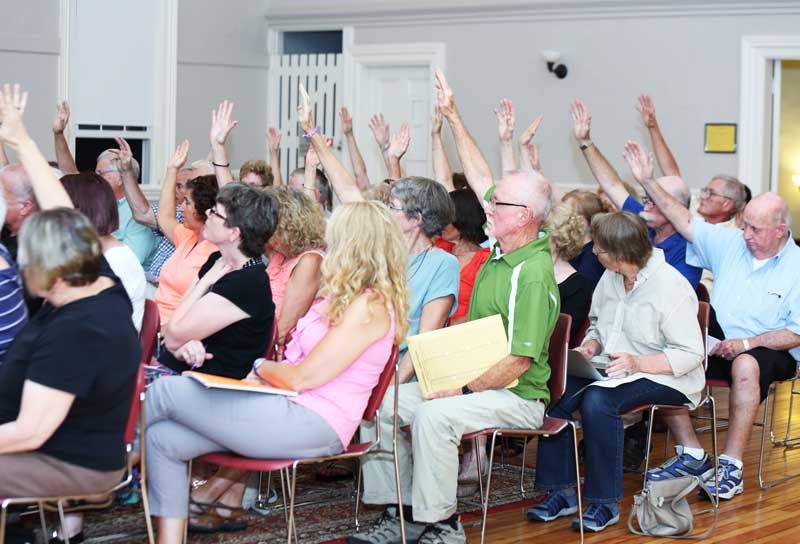
Retired teachers voted unanimously to retain their current health insurance at the August 22 Board of Selectmen meeting. (Photos by Lisa Aciukewicz)
Only three of Harvard’s five selectmen were present: Chairwoman Lucy Wallace, Alice von Loesecke, and Ken Swanton. After two hours of urgent objections—both spoken and written—from retired teachers, the three selectmen decided to delay a vote until their Sept. 5 meeting, when all five board members are expected to attend. In the meanwhile, Wallace said, absent members Kara Minar and Stu Sklar will watch Tuesday’s meeting on Harvard Cable TV’s video recording so that they hear the points raised by the teachers.
A major difference between the two insurance plans is how premium costs are shared. In the state-run plan, retired teachers pay either 10 or 15 percent, depending on when they retired, and the town pays the rest. That division is currently frozen by state law. But under the Minuteman plan, the retirees’ share of the premium would jump to 25 percent for some plans and 50 percent for others, with the possibility that all could rise to 50 percent. According to a handout prepared by Assistant Town Administrator Marie Sobalvarro, retirees at several nearby regional schools already pay 50 percent of the premiums for all plans.
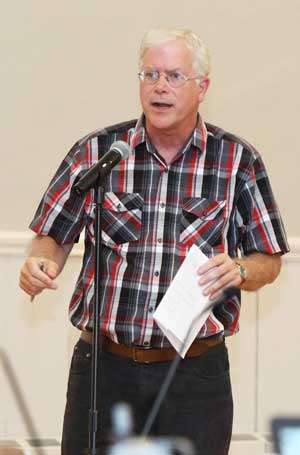
Former Bromfield teacher Michael McGarty addresses the selectmen. He and his wife Maryellen McGarty, also a former Bromfield teacher, drove from Cape Cod for the meeting.
In an email, Sobalvarro said the change was estimated to save the town $215,000 a year, about 1 percent of this year’s budget. Both she and the selectmen also said the change would create “parity” between the teachers and other town employees, who are already insured under the Minuteman program.
‘We had an agreement’
The largest part of the hearing was taken up with Sobalvarro and Town Administrator Tim Bragan reading aloud some 30 letters from retired teachers, which took more than an hour. All the letters urged the selectmen not to make the change.
“It is easy to pick the pockets of senior citizens,” wrote former elementary teacher Julia Chadwick, who taught in Harvard for 28 years and has lived in town for more than 50 years. “Would you ask your elderly mother or grandmother to give up her health insurance that has served her well for many years and mention to her that you’ll replace it with new insurance which will cost her more as she gets older?”
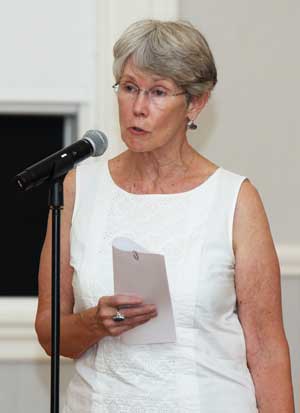
Former third-grade teacher Diane Temple.
While nearly all letter-writers worried about the rising premiums, they also raised concerns about the difficulty of finding doctors who would accept new plans, the lack of information available on coverage and copays, and the very limited options for retirees who had moved to other states. Many also pointed out that Minuteman lacked dental and life insurance options.
After the letters were read into the record, attendees at the meeting expressed their views. Former drama teacher Mike McGarty, who now lives on Cape Cod, said it had taken him two years to find a doctor there, because so few were accepting new patients. When he called doctors’ offices to ask if they took the plans offered by Minuteman, he said, many said no. As for retirees who live outside Massachusetts, he said, “There is no real national coverage in any of the plans except through emergency rooms. … That’s not parity!” Teachers in the room broke into applause.
Many of the retired teachers, both by letter and in person, emphasized that they believed they had had a promise from the town—that in return for their years of service to Harvard’s children, as former elementary teacher Diane Temple put it, “There was a compact of agreement we would be taken care of when we retired. No, our salaries wouldn’t be as great as they would have been in another situation. … But we had an agreement that we would be OK when we retired.”